







Tractor for Sugarcane Farming: Choosing the Right Tractor for Infielder Operations

Crop Advisory & Sowing
Tractor for Sugarcane Farming: Choosing the Right Tractor for Infielder Operations
Infielder work supports harvested-cane collection and transfer, so the right tractor depends on attachment compatibility, load, field conditions and control, not horsepower alone.

 Save PDF
 Share

Agri-Equipment Content Specialist
In This Article
- What Is an Infielder and How Does It Work in Sugarcane Farming?
- Which Tractor Is Suitable for Infielder Operations in Sugarcane Fields?
- What Features Should I Look for in a Tractor for Sugarcane Farming?
- Hydraulics, PTO and Attachment Compatibility for an Infielder Tractor
- Tractor Stability, Tyres and 2WD vs 4WD for Sugarcane Infielder Operations
- Low-Speed Control, Turning Radius and Manoeuvrability for Infielder Operations
- Which Swaraj Tractors Can Be Considered for Sugarcane Infielder Operations?
- Frequently Asked Questions
An infielder tractor works as part of sugarcane-harvest logistics, operating close to the harvester and under sustained load while it receives and transfers cut cane. Choosing the right tractor for sugarcane farming depends on the exact attachment requirement, usable power and torque, hydraulic/PTO setup, stability, tyres, transmission and field conditions.
Choose the tractor around the exact infielder attachment, operating load and field conditions, not a fixed HP number alone.
1 What Is an Infielder and How Does It Work in Sugarcane Farming?
An infielder works alongside a sugarcane harvester to receive and transfer harvested cane for onward transport, and its exact requirements vary by manufacturer.
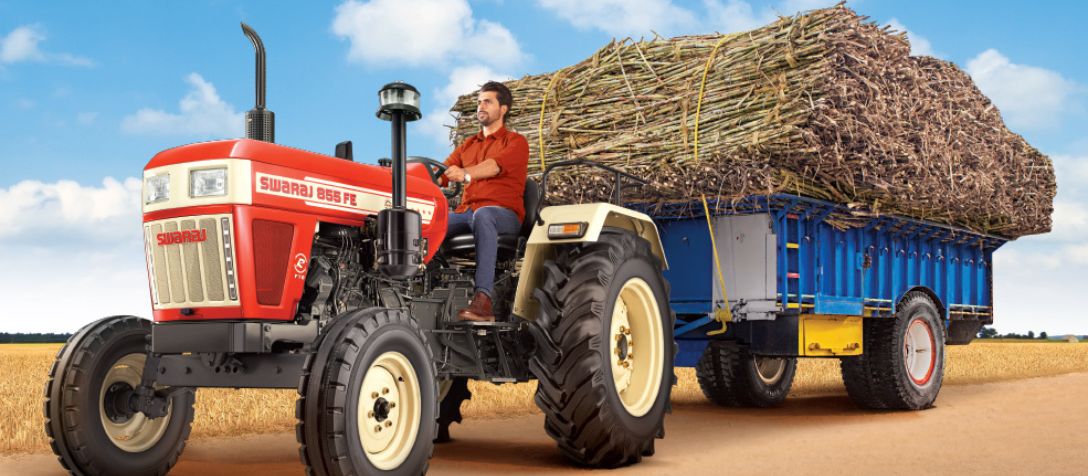
During mechanised sugarcane harvesting, the harvester cuts and loads cane directly, while an infielder unit, often trolley- or bin-mounted, moves alongside to receive that cane and carry it to a transport vehicle. This keeps the harvester working continuously instead of stopping to unload. Infielder design, capacity, mounting and drive or hydraulic requirements differ by manufacturer, so sugarcane farming with mechanised harvesting means checking the exact infielder's specification, not assuming any tractor will do.
2 Which Tractor Is Suitable for Infielder Operations in Sugarcane Fields?
The right tractor is the one that meets the exact infielder manufacturer's power, hydraulic, drive-interface and load requirements, not a fixed minimum HP.
There is no single HP figure that fits every infielder, since manufacturers specify different requirements for their attachments. Before choosing a tractor, check the power and load requirement stated by the infielder manufacturer, the hydraulic and drive-interface needs (since some units need particular flow, PTO or auxiliary provisions), mounting and hitch compatibility, field size and turning space near the harvester, and the sustained weight of the harvested-cane load.
A heavy-utility Swaraj tractor is often better placed for this kind of sustained, attachment-led work, but the deciding factor is still whether it meets your specific infielder's stated requirements.
3 What Features Should I Look for in a Tractor for Sugarcane Farming?
Feature priority depends on the exact infielder and operating conditions, not on any single spec.
Usable torque under load keeps the tractor working steadily beside the harvester without labouring.
Suitable transmission and low-speed control help hold a steady pace during continuous cane transfer.
Axle and chassis strength handle the sustained load of infielder operation.
Braking and steering control matter for safe, close-quarters work.
Hydraulic capability supports the infielder's lift or tipping function where required.
PTO or external-attachment provision, where the infielder specifies it.
Tyre and traction setup suited to field surface and load.
Operator comfort, important over long harvest-season shifts.
A tractor for sugarcane farming with infielder duty generally needs more of these features working together than a tractor used only for tillage.
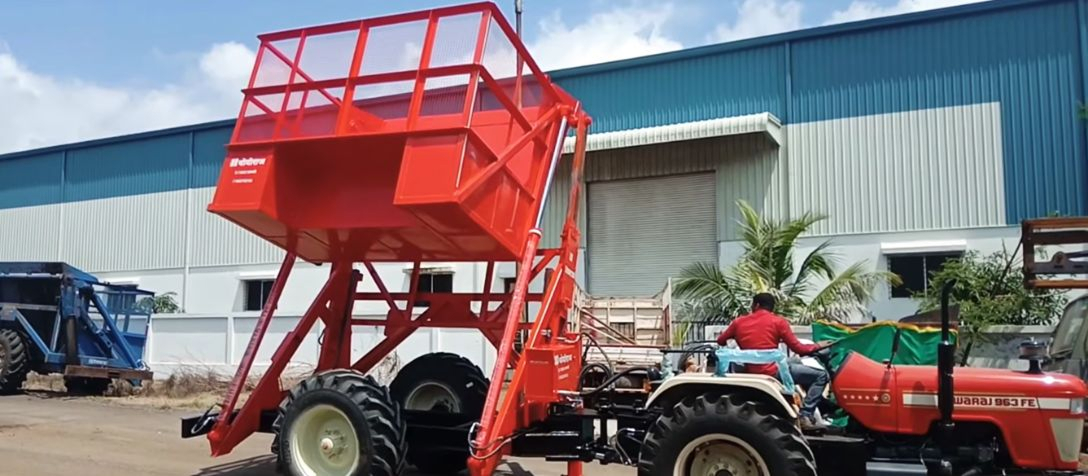
4 Hydraulics, PTO and Attachment Compatibility for an Infielder Tractor
Attachment compatibility has to be checked directly against the infielder manufacturer's specification before connecting it, since requirements vary by unit.
Check | What to verify |
|---|---|
Hydraulics | DCV or auxiliary hydraulic controls the infielder needs, and whether flow and pressure match. |
PTO or drive interface | Only where the infielder specifies it; not every infielder is PTO-driven. |
Hitch and mounting | Whether the tractor's hitch and linkage suit the infielder's mounting arrangement. |
Electrical/auxiliary | Any lighting or auxiliary connections the unit requires. |
Manufacturer limits | Both tractor and infielder manufacturer limits, checked together, not assumed from hydraulic lift capacity alone. |
Hydraulic lift capacity on its own does not prove compatibility. Confirm fit against both the tractor's official specification and the infielder manufacturer's requirement before you commit.
5 Tractor Stability, Tyres and 2WD vs 4WD for Sugarcane Infielder Operations
Stability and traction depend on load, field surface and turning behaviour, and the right drive type follows from those, not a fixed rule.
Attachment load, field surface, soil moisture, ruts and slopes all affect how stable a tractor stays during infield work, along with how well it turns near the harvester. Tyre grip suited to your field surface matters as much as drive type. 4WD can help where the field is soft, rutted or sloped, since it adds traction under sustained load, but it isn't mandatory for every infielder operation. A well-matched 2WD tractor can work well on firmer, more level fields. Weigh up your surface, load, traction need and turning space before deciding between 2WD and 4WD.
6 Low-Speed Control, Turning Radius and Manoeuvrability for Infielder Operations
Predictable low-speed control and manoeuvrability matter because the tractor works beside a moving harvester and repeatedly transfers cane in a tight space.
Low-Speed Control: Smooth low-speed gear response helps the tractor maintain a steady, predictable pace while working alongside the harvester during cane transfer.
Turning Radius: A tighter turning radius helps the tractor work more easily in confined field spaces and around the harvester.
Manoeuvrability: Responsive steering makes it easier to position and guide the tractor repeatedly during close-quarters infielder operations.
Visibility/Steering & Braking: Good visibility, reliable steering and responsive braking support safer operation when working close to moving harvesting equipment.
Operator comfort and routine between-shift checks are also important during harvest season, when the tractor may operate for long hours with limited downtime.
7 Which Swaraj Tractors Can Be Considered for Sugarcane Infielder Operations?
Swaraj offers a few models with official specifications suited to heavy equipment, hydraulic and PTO applications, making them worth considering for sugarcane infielder operations.

Swaraj 969 FE: Comes with a company-fitted DCV kit built for joining heavy equipment, including harvesters, along with an independent PTO clutch and an easy hitch lever.
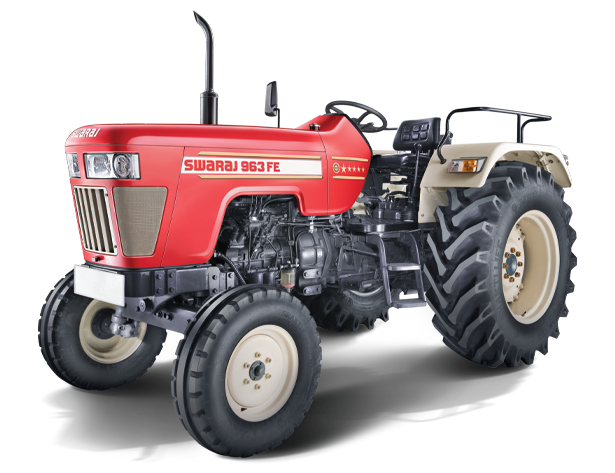
Swaraj 963 FE: Offers live hydraulics with a 2,200 kg lifting capacity at the lower link ends, an independent PTO clutch and oil-immersed disc brakes.
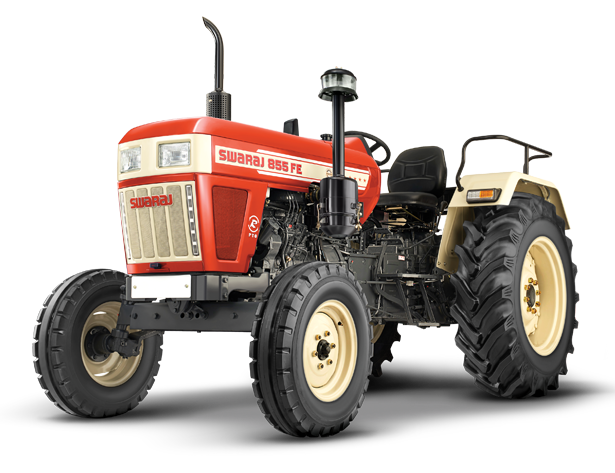
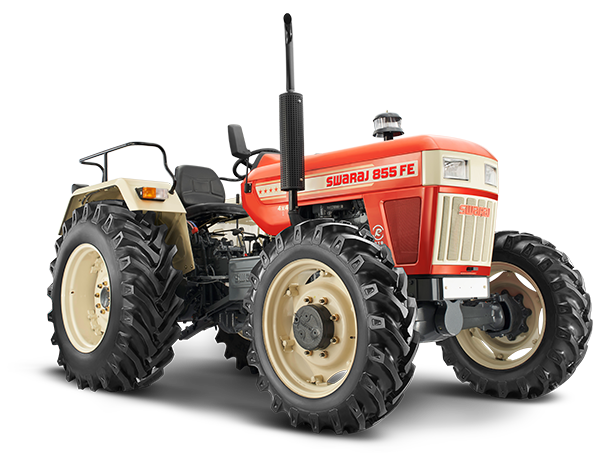
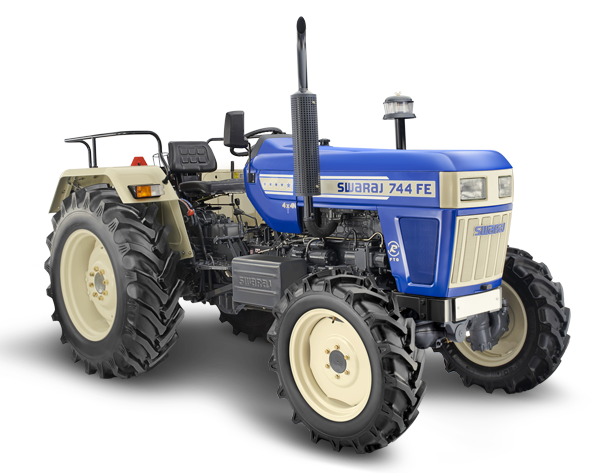
Swaraj 855 FE 4WD: Built for better pulling ability and less slippage across soil conditions, with scope to run bigger implements at the same engine HP.
Exact infielder compatibility still has to be checked against your specific attachment's requirements. Browse the full Swaraj range or speak with your nearest dealer to confirm fit.
Frequently Asked Questions
Which tractor is best for farming?
There's no single best tractor for all farming. For sugarcane infielder work, the right one is whichever model meets your infielder's power, hydraulic and mounting requirements while suiting your field conditions.
Does an infielder tractor always need 4WD in sugarcane fields?
No. 4WD helps on soft, rutted or sloped ground, but a well-matched 2WD tractor can handle infielder work well on firmer, level fields.
How do I check whether an infielder attachment is compatible with my tractor?
Compare your tractor's official hydraulic, PTO and hitch specifications against the infielder manufacturer's stated requirements, and confirm with your Swaraj dealer before connecting the attachment.


